Neutrons help improve 3D printing of aluminum
Materials research for the future of aviation
The focus is on the laser powder bed fusion (LPBF) process, an additive manufacturing process in which metal powder is fused layer by layer using a laser to form high-precision components. This process allows for incredible design freedom. However, it could not be used, for example, with high-strength aluminium alloys, such as those required for load-bearing structural elements in aircraft and spacecraft, as they tend to crack when cooled.
Ceramic particles as "micro-builders"
The project pursues a new approach in which special additives in the metal powder react chemically during the printing process and form finely distributed ceramic particles in the submicrometre range. These particles influence crystal growth in the material by promoting a fine-grained, uniform microstructure, thereby reducing the formation of cracks. This enables the industrial use of aluminium alloys previously considered virtually impossible to print, offering clear advantages such as lower weight, higher load-bearing capacity and more sustainable production through material savings.
Research partners with clear competencies
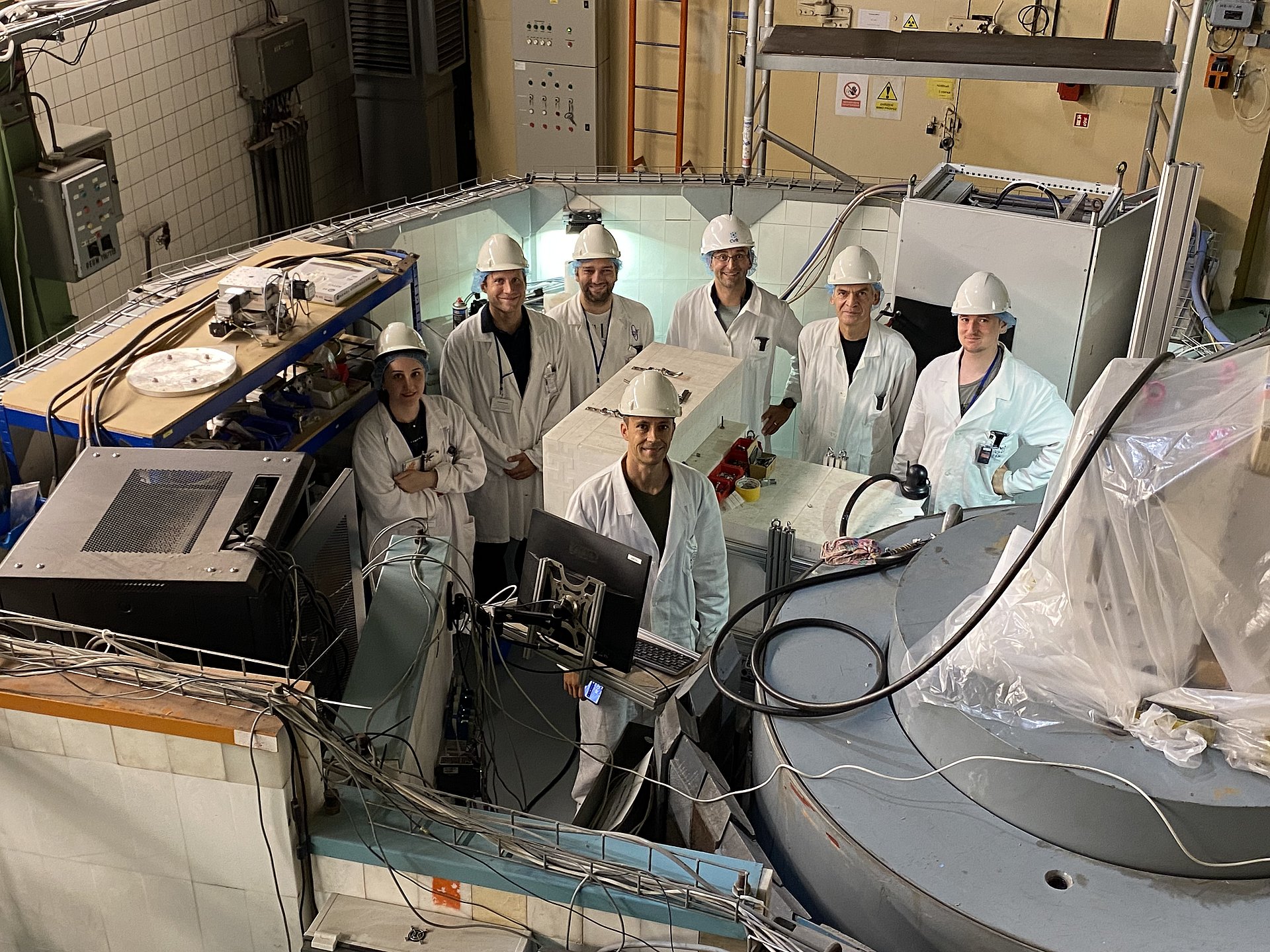
The three research partners are working closely together on the project, which is funded by the Federal Ministry of Education, Technology and Space (BMFTR) with a total of €1.17 million as part of the Action Plan for Research into the Universe and Matter (ErUM):
The 3D printing company Colibrium Additive is contributing state-of-the-art industrial technology and is working with TUM and FAU to develop the appropriate process parameters for the LPBF process. FAU analyses printed materials and their mechanical properties, in particular using microscopic methods. Researchers at FRM II are responsible for the comprehensive investigation and quality testing of the materials using neutron methods.
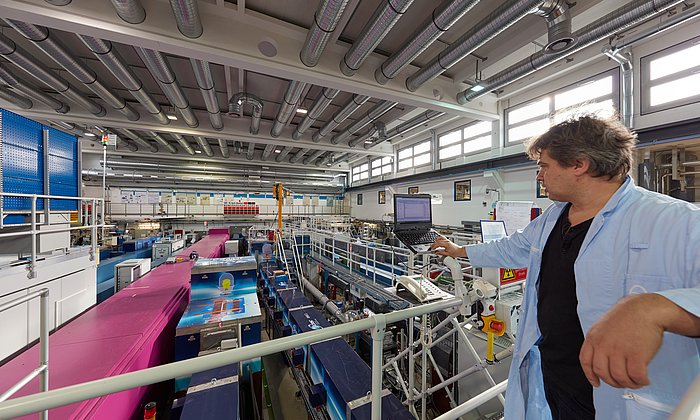
Several specialised methods are used at FRM II: Neutron diffraction allows phase distributions and internal stresses to be determined precisely, key parameters for assessing strength and stability. Neutron imaging (radiography and tomography) makes it possible to visualise even the finest cracks or pores deep inside the samples in a non-destructive manner. In general, the greater sensitivity of neutrons compared to X-rays is used to better understand the material's microstructure.
Dr. habil. Ralph Gilles, project manager at TUM and spokesperson for the consortium, explains the particular advantage of these methods: “Neutrons have a high penetration depth and are therefore ideal for analysing large, additively manufactured components for industry – a task that would be impossible with other techniques.”
In addition, the combination of neutron experiments with mechanical loading and temperature variation on a testing machine specially developed at the FRM II allows for a realistic simulation of industrial operating conditions. This makes it possible to record the material behaviour under typical operating conditions.
- The FRM II
- Action Plan for Research on the Universe and Matter (ErUM) of the BMFTR
- The testing machine was funded by the BMFTR as part of the High Temperature Materials (HiMat) and Hydrogen Materials (H2Mat) projects.
Technical University of Munich
Corporate Communications Center
- Laura Richter und Ulrich Meyer
- presse@tum.de
- Teamwebsite
Contacts to this article:
Dr. habil. Ralph Gilles
Spokesperson for the AlaAF consortium
Technical University of Munich
Heinz Maier-Leibnitz Zentrum (MLZ)
Head of Advanced Materials Group
Industry Coordinator of the MLZ