Climate impact of urban vegetation visible in detail for the first time
Urban trees can absorb more CO₂ than cars emit during summer
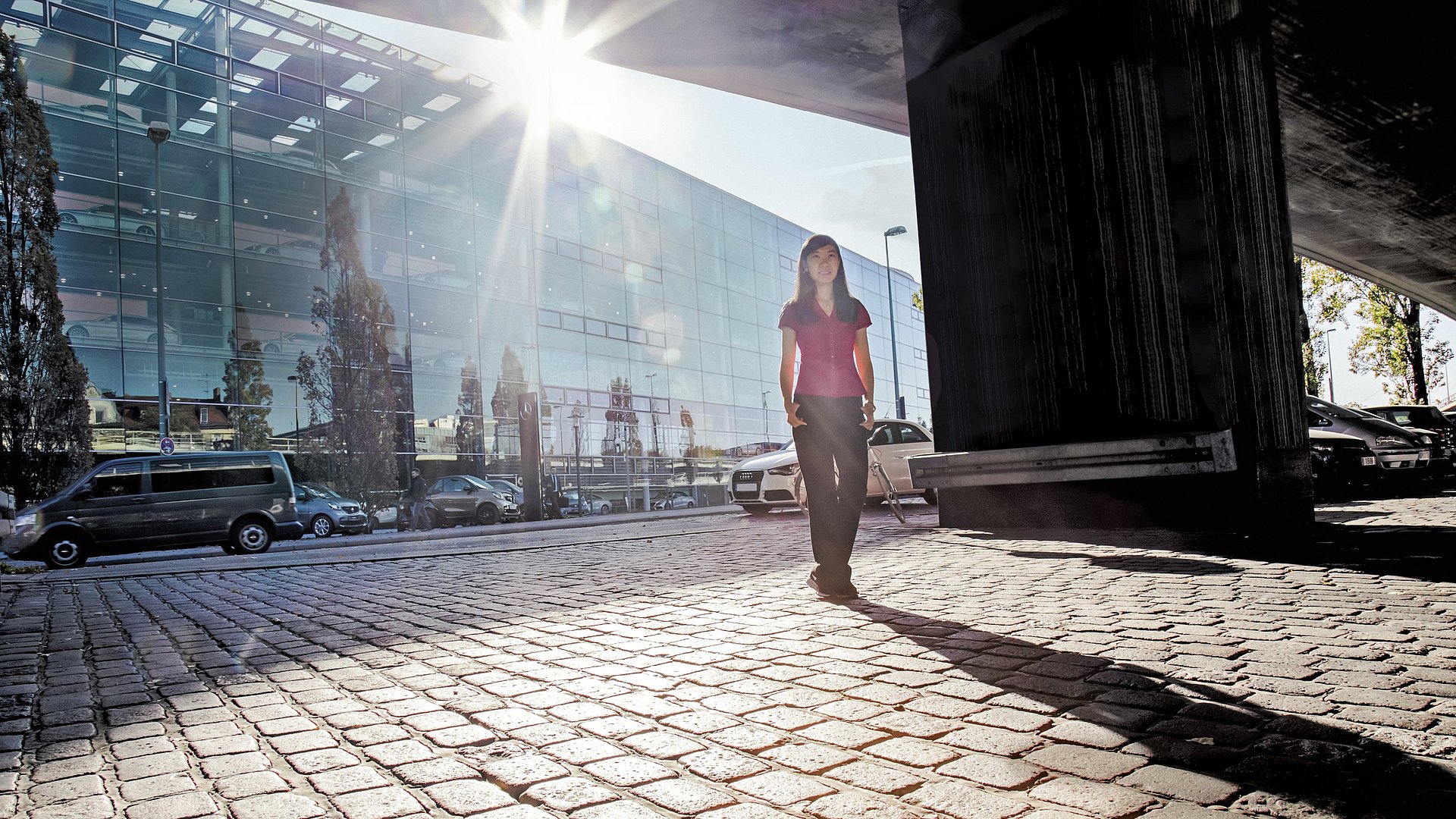
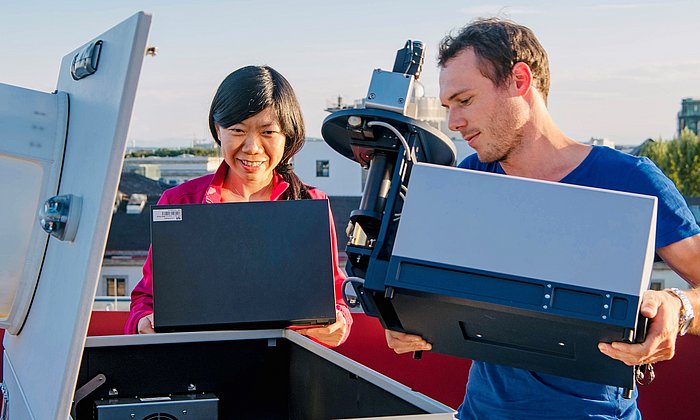
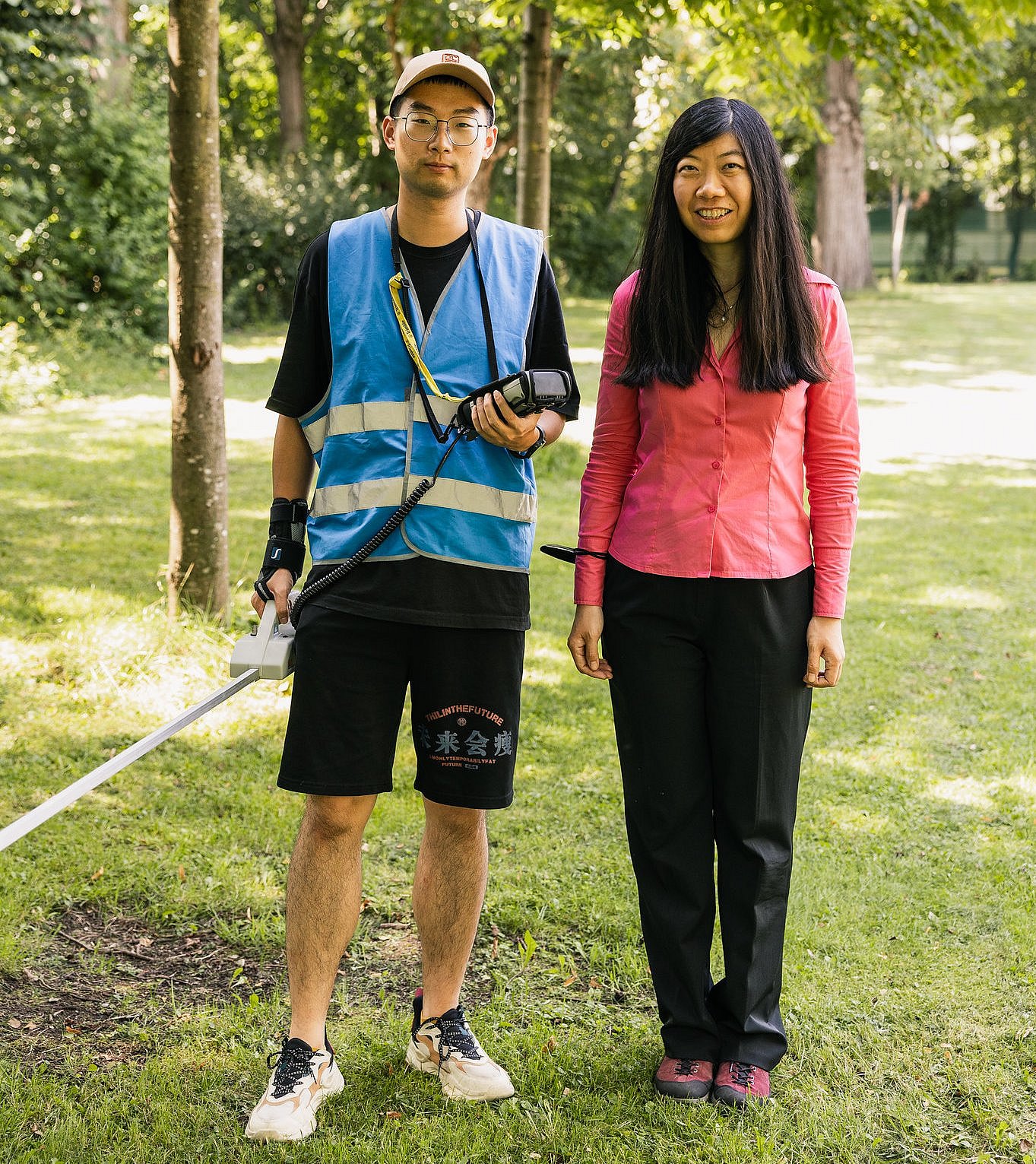
According to the model, among all vegetation types, urban trees make the greatest contribution to offsetting carbon dioxide emissions in cities. On some summer days, their absorption can cover the emissions from Munich's urban traffic and even exceed them at times. Because soil respiration exceeds photosynthesis, grassy areas release more carbon dioxide than they bind and are therefore considered a source of CO₂ on an annual basis. Jia Chen, professor of environmental sensing and modeling, and her doctoral student Junwei Li conducted biospheric field measurements in urban parks from April 2024 to February 2025, to validate their model results.
Trees as CO₂ sinks, grasslands as net sources
Previous biogenic flux models are mostly based on satellite data with a resolution of around 500 meters. This means that smaller green spaces or individual trees in the city can hardly be detected, and the actual vegetation area is significantly underestimated. Researchers at TUM have developed a model that depicts CO₂ flows in urban areas with a resolution of ten meters, enabling it to map urban vegetation more accurately than previous models. In the future, the methods, which were deployed in Munich and Zurich, will be applied to other cities.
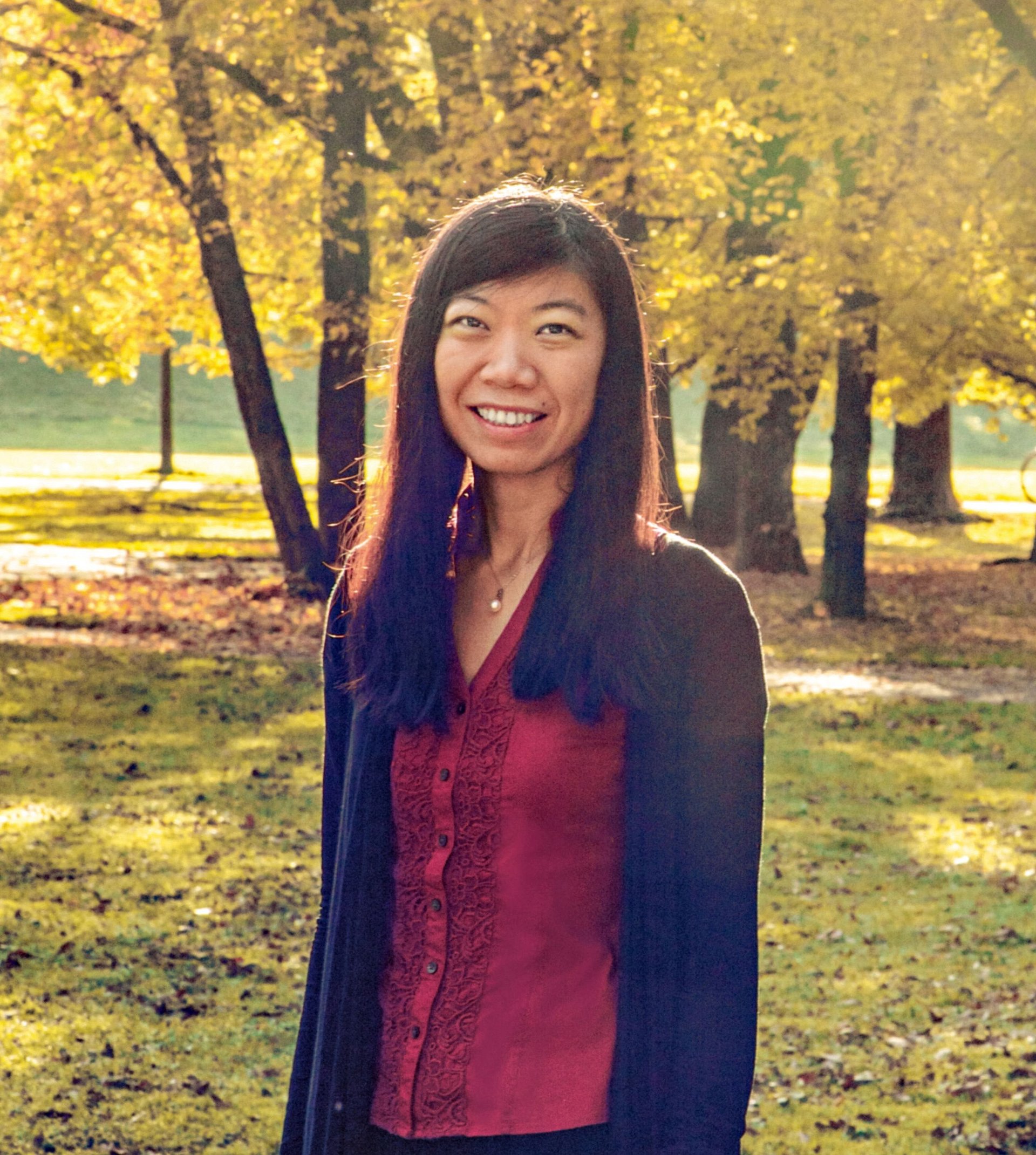
“The current study shows that the urban vegetation landscape is very heterogeneous. Our high-resolution analysis reveals which areas actually have an impact on the climate,” says Jia Chen, professor at the TUM School of Computation, Information and Technology. “Of course, the results must be viewed in an overall context. Green spaces offer additional advantages over sealed surfaces. Among other things, they lower the temperature in the city in summer, serve as infiltration areas, and improve the quality of life.”
The research results were produced in collaboration with the University of Basel, EMPA, and DLR, with support from the EU project “ICOS Cities.”
Sustainability
We are committed to the sustainable transformation of society in scientific, economic, ecological, and social terms. Get to know our sustainability strategy.
Li, J., Chen, J., Glauch, T., Brunner, D., Marshall, J., Ponomarev, N., et al. (2026). Fine-scale estimation of urban biogenic CO2 fluxes: A novel framework integrating multiple versions of vegetation photosynthesis and respiration models and in situ measurements. Earth's Future, 14, e2025EF007458. https://doi.org/10.1029/2025EF007458
- Since 2015, Jia Chen has been TUM Professor of Environmental Sensing and Modeling. Her research focuses on topics related to climate change and urban air pollution. She develops sensors and mathematical models for the precise measurement of greenhouse gas emissions/removals and air quality parameters. These data can be used to develop new climate protection measures and assess existing ones. Her research is funded through the United Nations Environmental Program (UNEP), the EU project ICOS Cities, and an ERC Consolidator Grant, among other sources.
- Prof. Jia Chen is also head of the Environment Innovation Sector at the Munich Institute of Robotics and Machine Intelligence (MIRMI). With MIRMI TUM has created an integrative research center where over 70 TUM professors and their teams now work on new robotics and AI-based solutions in medicine, industrial production and nursing care.
Technical University of Munich
Corporate Communications Center
- Julia Rinner
- julia.rinner@tum.de
- presse@tum.de
- Teamwebsite
Contacts to this article:
Prof. Jia Chen
Technical University of Munich
Professor of Environmental Sensing and Modeling
jia.chen@tum.de