150 years of TUM – Stories from the 2018 anniversary
Mars Exploration Rovers
The Mössbauer effect and water on Mars
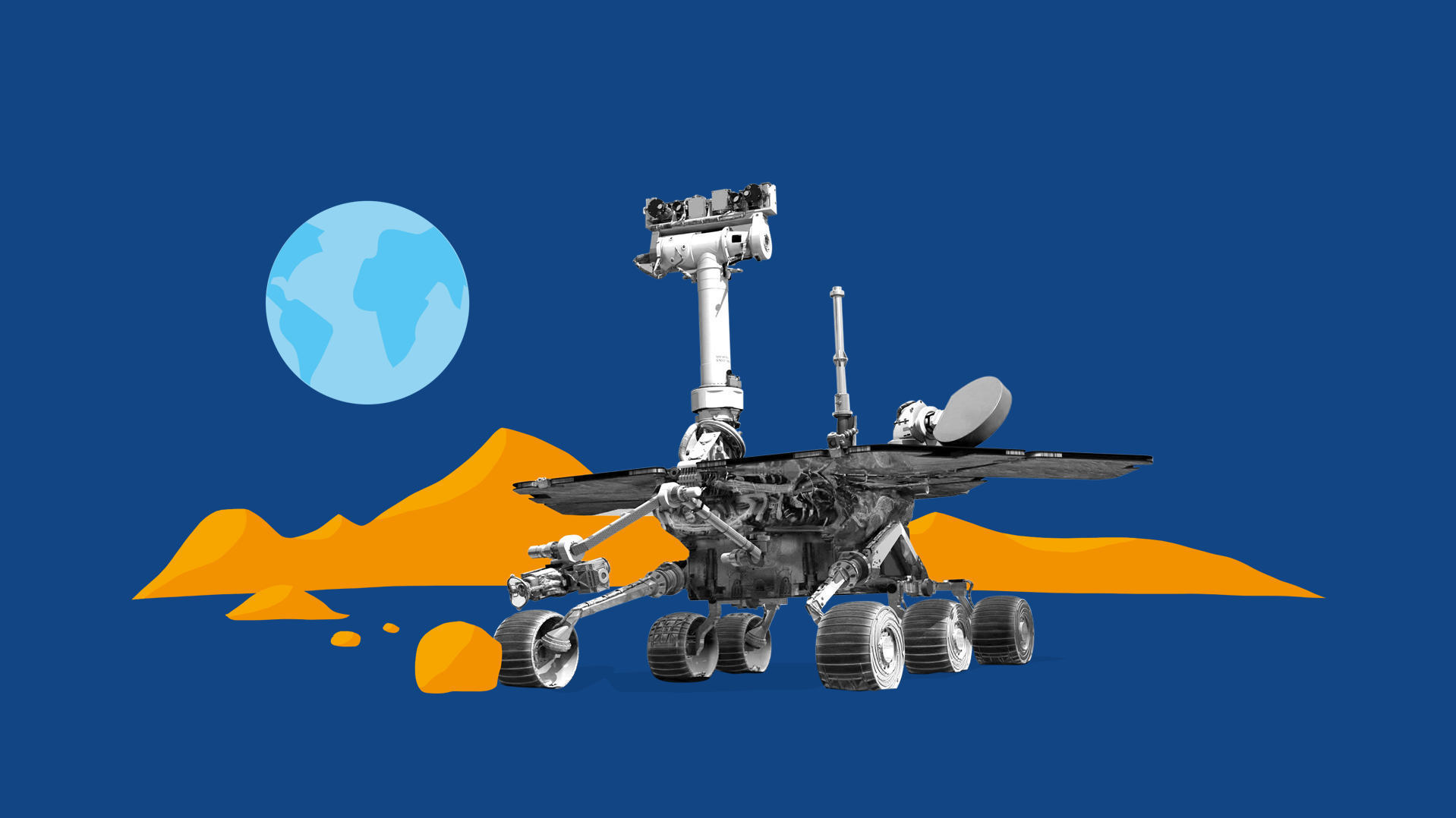
In 2004, NASA space probes Spirit and Opportunity landed on Mars in search of clues to the history of our neighboring planet. As part of this venture, they collected rocks, analyzed them and sent the results back to Earth. During their many miles of exploration, they came across minerals that only form in the presence of water – thus proving that there must have been water on Mars at some point in time.
An essential instrument in identifying these traces was the Mössbauer Spectrometer, named after Munich physicist Rudolf Mössbauer. While working on his doctoral thesis at what was later to become the Technical University of Munich, in 1958 he discovered “recoilless nuclear resonance absorption of gamma radiation” – which he rapidly went on to demonstrate in practice.
Unknown rocks and materials – whether on Mars or Earth – can be chemically analyzed using this “Mössbauer effect”. Here, the spectrometer measures the characteristic gamma radiation scattered back by the atomic nuclei of certain elements when they are excited by a radioactive substance. In this way, the chemical compounds in the rocks can be clearly identified. In 1961, Rudolf Mössbauer – aged only 32 – was awarded the Nobel Prize for this discovery.
Like leaping from a boat
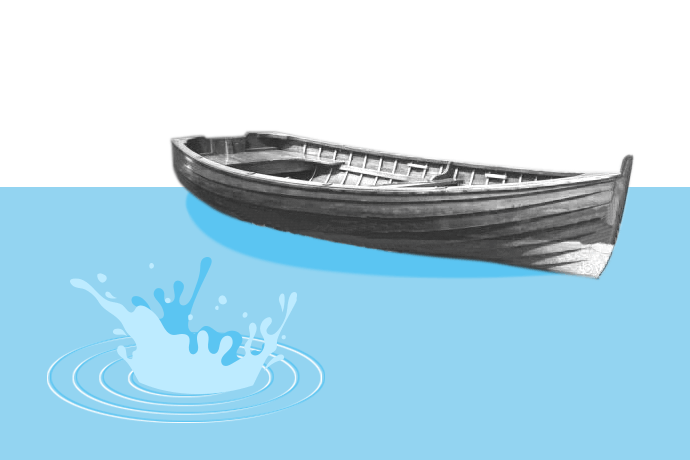
Mössbauer’s fellow physicist Francisco E. Fujita explains the Mössbauer effect like this: If a child tries to jump ashore from a small boat, they land in the water because the boat is thrust backwards when the child takes the leap. But if the boat is on a frozen lake, the child lands safely on the shore, because the boat cannot be propelled backwards.
Instead of a boat, Mössbauer took iridium-191 atomic nuclei that emit gamma radiation. Like the child, when the gamma particle rushes away, it imparts momentum to the atom and loses some energy – enough energy so that similar atomic nuclei are no longer excited. However, if the atom is embedded in a crystal structure, it becomes like the child on the frozen lake and can take all of its energy with it. So if it now encounters a similar atomic nucleus, its energy is sufficient to excite it.
The mystery behind our breathing
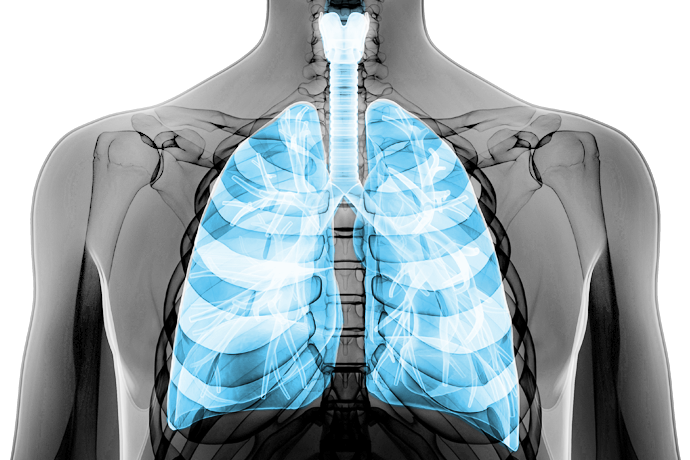
For a long time, experts could not agree whether or how exactly the vital oxygen from the air we breathe is bound to the hemoglobin in our red blood cells. From the crystalline structure of the molecule, it actually looks as though oxygen and iron atoms would not be able to join together.
Yet this seemingly impossible complex of iron and oxygen is the chemical reaction that keeps us all alive, with the hemoglobin transporting oxygen from the lungs to cells around the body. And with the help of Mössbauer spectroscopy, the dispute was finally solved: This method proves that oxygen is indeed bound to the iron atom in hemoglobin.
The second Mössbauer effect
When Rudolf Mössbauer received the Nobel Prize in 1961, he had already been working in the US for a year. Research conditions at the California Institute of Technology were significantly better than in Germany at the time. But his home university was determined to win back the Munich-born physicist, offering him a professorship in 1964. Mössbauer was keen, but imposed some conditions – calling for a restructured physics department based on the American model, with plenty of lab space and a flat hierarchy, to be located in a new building in Garching.
When the Bavarian government approved the new physics faculty, the press at the time talked about a “second Mössbauer effect”. The new physics building was ultimately completed in 1970.
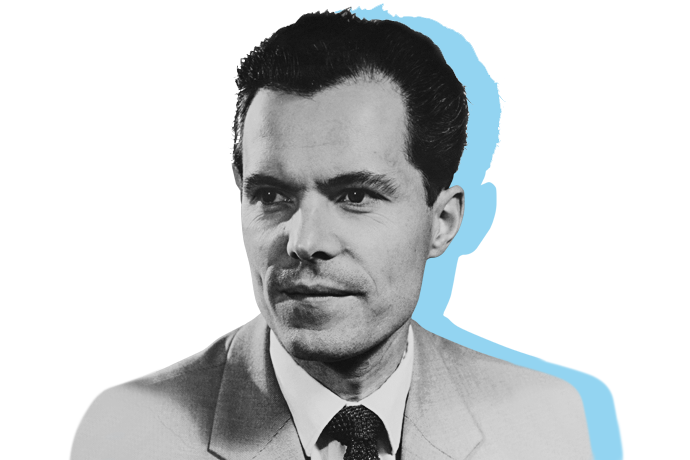
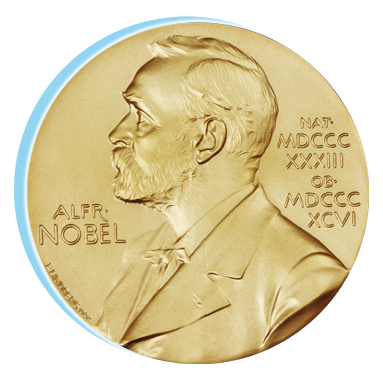
“Mössbauer’s discovery has been received with enormous interest. In many places, research into the Mössbauer effect is already under way. His discovery has made it possible to demonstrate the fundamental consequences of Einstein’s theory of relativity in the laboratory.”
Ivar Waller, 1961, Nobel Committee for Physics of the Royal Swedish Academy of Sciences, from the award ceremony speech for Rudolf Mössbauer
Radio interview with Rudolf Mössbauer (in German – Deutsche Welle 1968, 14’44 Min., download from publication server mediatum)
In 1968, the Deutsche Welle interviewed the young Nobel Prize winner Rufolf Mössbauer, who had just returned to work in Germany – as professor at his Alma Mater, today’s TUM. In this interview, he does not only talk about how he managed to make his decisive discovery – but also compares the research conditions of the US and Germany at the time, and calls for stronger international exchange in sience. (Source: Deutsche Welle)
Disclaimer
This story was published in 2018 to mark TUM’s 150th anniversary on a jubilee website that has since been deactivated.
Text: TUM Web Communications Team; Graphics: KW NEUN

Literature on the history of TUM
- Wolfgang A. Herrmann (Hrsg.), Martin Pabst/Margot Fuchs (Verf.), Technische Universität München - Geschichte eines Wissenschaftsunternehmens, 2 Bd., Berlin 2006.
Link to the online catalog of the University Library - Wolfgang A. Herrmann, Winfried Nerdinger (Hrsg.), Die Technische Hochschule München im Nationalsozialismus, München 2018.
Link to free download via mediaTUM (PDF, in German, 79 MB)
Link to order the book
Link to copies in the University Library - Irene Meissner, Bauten+Kunst. Technische Universität München 1868-2018, München 2018. Link to the online catalog of the University Library
- Martin Pabst, Alumni der TUM. Prägende Gestalter aus der Technischen Universität München, München 2018. Link to the online catalog of the University Library
- Martin Pabst, Köpfe der TUM. Geniale Entdecker und Erfinder aus der Technischen Universität München, München 2018. Link to the online catalog of the University Library
- Brigitte Röthlein, Pioniere gestalten die Welt der Technik. 150 Jahre Forschung an der Technischen Universität München, München 2018. Link to the online catalog of the University Library
Further books and information on the history of TUM
Acknowledgements
We would like to thank everyone who helped us write the texts and create the visualizations. In particular, we would like to thank the authors of the books mentioned, the experts at the chairs, professors, staff, and press officers at the TUM Corporate Communications Center. We would also like to thank the staff of the Architecture Museum, the TUM German Heart Center, the TUM Klinikum rechts der Isar, the European Space Agency (ESA), and everyone else who provided us with expert advice and image material.
The anniversary stories were written by the TUM Web Communications team. The graphic content was created by KW NEUN – Designagentur.