150 years of TUM – Stories from the 2018 anniversary
DNA origami

DNA: perfect building block for nanomachines
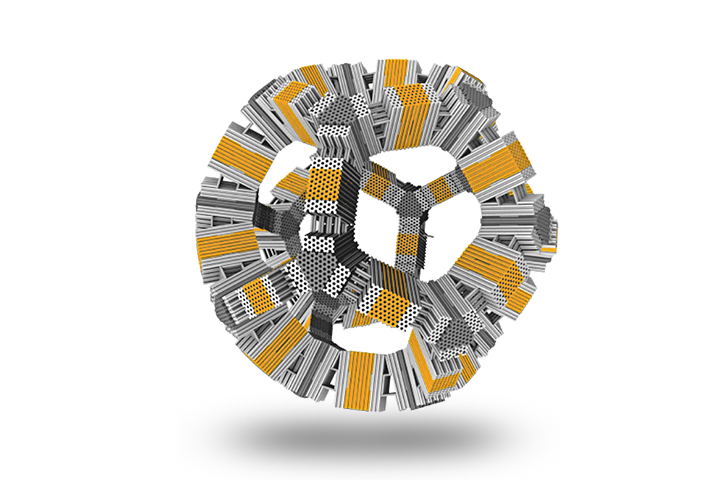
Millions of tiny figures hop around under an electron microscope, each of them only a few nanometers in size: robots waving their arms, books opening and closing, and interlocking gears. What physicist Hendrik Dietz and his team saw through the microscope in 2015 marked a decisive step forward. For the first time, they had produced nanoscale structures in their own laboratory that were capable of movement – from snippets of DNA code.
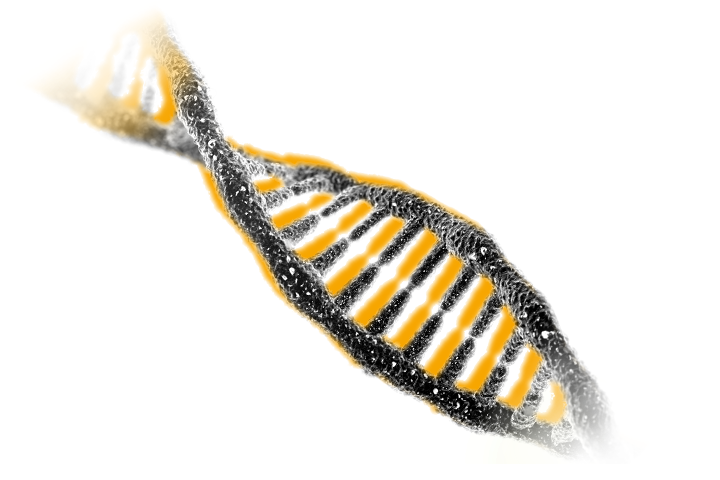
Dietz is hoping he will soon be able to build entire machines and motors out of DNA in the laboratory, which could then be used, for instance, as precise drug delivery vehicles in the human body. So he continues bending and folding DNA strands, compressing and stretching them before putting them back together in new ways. Since being developed in California in 2006, this principle has been known as “DNA origami”. And it was already around the turn of the century that scientists realized: These molecules that usually store our genetic information are ideally suited to such as purpose. DNA is stable and forms regular chains that are easy to recombine.
Dietz first constructed three-dimensional objects out of DNA as a postdoc back in 2009, together with colleagues at Harvard. Shortly afterwards, TUM appointed him Professor of Experimental Biophysics. Since then, his laboratory has steadily continued developing this origami technology. The team has produced artificial membrane channels made of DNA and proteins, for instance, as well as a nano-gripper. They have also succeeded in reducing the self-assembly time of DNA segments from a week to just a few hours. In 2015, Dietz was awarded the Leibniz Prize for his achievements, the highest honor in Germany for scientists.
Like Lego that builds itself
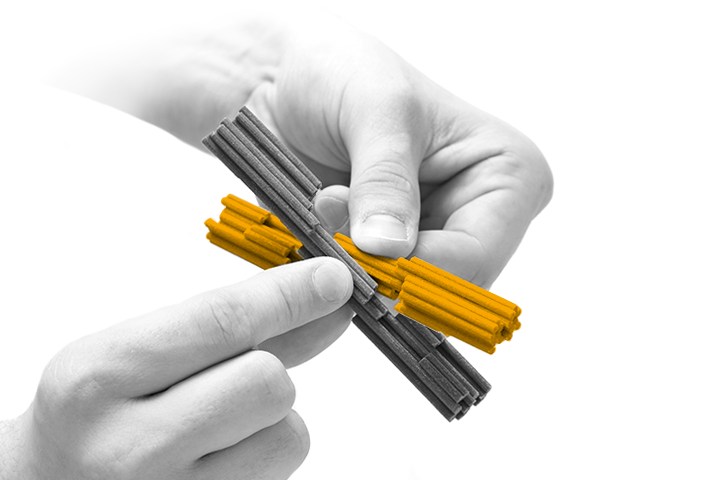
“You make all the parts you need, mix them together, heat them, shake them, and see what comes out.” Dietz’s description of the process for building new structures out of DNA segments certainly sounds simple. And the blocks do indeed put themselves together in the test tube – a phenomenon known in nanotechnology as self-organization.
Matching pieces slot together like Lego bricks. The researchers develop the target shape by computer before this self-organization process, however. The length of the chains and exact sequence of bases in a DNA strand determine the resulting structures – from nanoscale robots to grippers or propellers.
Cost-cutting bacteria
For a long time, one of the biggest obstacles to using DNA origami in the treatment of diseases was the price tag: it previously cost around 100,000 euros to produce just one gram of new DNA structures. But with the help of E. coli bacteria, Dietz has drastically reduced these costs. Researchers can now embed individual DNA segments of any length or structure into the bacterial DNA – and when those cells then divide, the target sequences are rapidly duplicated on a massive scale.
Together with bioprocess engineer Dirk Weuster-Botz, Dietz used this process to produce a demo pill from DNA segments in 2017. At a cost of just 100 euros per gram, this pill contains all the necessary components to build new nanostructures.
Nanotransporter for drug delivery
One of the next goals for Dietz and his research team is to build a transport system for the highly targeted delivery and release of medical substances in the human body. This localized action would thus protect the rest of the organism. They have already developed key components to achieve this, including a module that can make holes in cell membranes and a cage that could serve as a transport capsule.
However, there are still a lot of questions to answer. For instance, how does the body respond to a nanotransporter of this kind? Will the immune system fight it or will the body accept it without any problems? The first studies are already underway.
„We now have a framework for programming even the tiniest DNA building blocks. You can slot them together however you want – almost like Lego bricks.“
Hendrik Dietz, 2017, Professor of Experimental Biophysics at TUM and Carl von Linde Senior Fellow at the TUM Institute for Advanced Study
Video: How does Hendrik Dietz's laboratory work? (German, 1'05 Min., 2014)
Disclaimer
This story was published in 2018 to mark TUM’s 150th anniversary on a jubilee website that has since been deactivated.
Text: TUM Web Communications Team; Graphics: KW NEUN
Literature on the history of TUM
- Wolfgang A. Herrmann (Hrsg.), Martin Pabst/Margot Fuchs (Verf.), Technische Universität München - Geschichte eines Wissenschaftsunternehmens, 2 Bd., Berlin 2006.
Link to the online catalog of the University Library - Wolfgang A. Herrmann, Winfried Nerdinger (Hrsg.), Die Technische Hochschule München im Nationalsozialismus, München 2018.
Link to free download via mediaTUM (PDF, in German, 79 MB)
Link to order the book
Link to copies in the University Library - Irene Meissner, Bauten+Kunst. Technische Universität München 1868-2018, München 2018. Link to the online catalog of the University Library
- Martin Pabst, Alumni der TUM. Prägende Gestalter aus der Technischen Universität München, München 2018. Link to the online catalog of the University Library
- Martin Pabst, Köpfe der TUM. Geniale Entdecker und Erfinder aus der Technischen Universität München, München 2018. Link to the online catalog of the University Library
- Brigitte Röthlein, Pioniere gestalten die Welt der Technik. 150 Jahre Forschung an der Technischen Universität München, München 2018. Link to the online catalog of the University Library
Further books and information on the history of TUM
Acknowledgements
We would like to thank everyone who helped us write the texts and create the visualizations. In particular, we would like to thank the authors of the books mentioned, the experts at the chairs, professors, staff, and press officers at the TUM Corporate Communications Center. We would also like to thank the staff of the Architecture Museum, the TUM German Heart Center, the TUM Klinikum rechts der Isar, the European Space Agency (ESA), and everyone else who provided us with expert advice and image material.
The anniversary stories were written by the TUM Web Communications team. The graphic content was created by KW NEUN – Designagentur.