150 years of TUM – Stories from the 2018 anniversary
Polytechnic School of Munich

Dawn of the Technology Age
Heaters with humidity control, battery-operated bell systems and elevators that delivered meals as if by magic – the nineteenth-century palaces and castles of Ludwig II were bursting with imaginative and sophisticated technology. Bavaria’s King was extremely enthusiastic about the technical developments of his day. Indeed, when he visited Paris for the International Exposition of 1867, he was even said to be more interested in technical advances than in finding a princess to marry.
A year later, in 1868, Ludwig founded TUM’s predecessor – Munich’s polytechnic school. Its purpose was “to bring the igniting spark of science” to the commercial and industrial world and to provide his kingdom with a skilled workforce for railroad construction. Certainly, the new college played a key role in Bavaria’s transition to a high-tech hub – and has evolved from its modest beginnings to become a world-class university over the last 150 years.
All thanks to Ludwig’s father
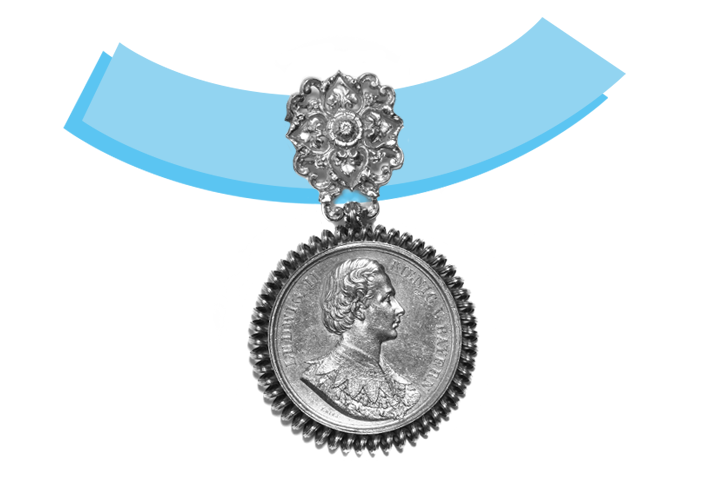
King Ludwig II was TUM’s original founder and even influenced the exterior design during construction work. His portrait still adorns the chain of office worn by TUM’s President today. However, the university’s foundation actually goes back even further to Ludwig’s father, Maximilian II, who declared that he would rather have been a technical university professor than a king.
He instigated a reform of the technical education system, which paved the way for the subsequent foundation of TUM’s predecessor institution.
Professors of palace construction
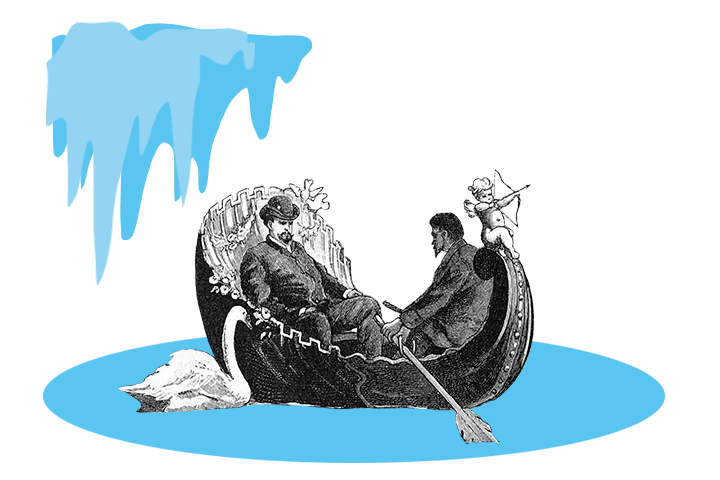
When building his fairytale castles, Ludwig turned to the professionals. Experts from his newly founded college were on hand to assist with technical issues – with physics professor Wilhelm von Beetz advising on electrical lighting for the Venus Grotto at Linderhof Palace, for instance.
Beetz also worked on specially coated glass panes, with a view to imitating the Capri blue so admired by the King.
From regional college to international university
Despite Ludwig’s keen interest in the latest technologies, the King’s generosity only extended to the fields of art and architecture. His father Maximilian’s generous promotion of the sciences came to an end under Ludwig’s reign. The new King took a highly regional approach to his academic staffing policy: preference was to be given to Bavarian applicants when appointing professors, for instance.
Things have certainly changed over time, with TUM now specifically recruiting outstanding staff, students and researchers from all over the world. The university’s offices and research centers now span four continents.

Disclaimer
This story was published in 2018 to mark TUM’s 150th anniversary on a jubilee website that has since been deactivated.
Text: TUM Web Communications Team; Graphics: KW NEUN
Literature on the history of TUM
- Wolfgang A. Herrmann (Hrsg.), Martin Pabst/Margot Fuchs (Verf.), Technische Universität München - Geschichte eines Wissenschaftsunternehmens, 2 Bd., Berlin 2006.
Link to the online catalog of the University Library - Wolfgang A. Herrmann, Winfried Nerdinger (Hrsg.), Die Technische Hochschule München im Nationalsozialismus, München 2018.
Link to free download via mediaTUM (PDF, in German, 79 MB)
Link to order the book
Link to copies in the University Library - Irene Meissner, Bauten+Kunst. Technische Universität München 1868-2018, München 2018. Link to the online catalog of the University Library
- Martin Pabst, Alumni der TUM. Prägende Gestalter aus der Technischen Universität München, München 2018. Link to the online catalog of the University Library
- Martin Pabst, Köpfe der TUM. Geniale Entdecker und Erfinder aus der Technischen Universität München, München 2018. Link to the online catalog of the University Library
- Brigitte Röthlein, Pioniere gestalten die Welt der Technik. 150 Jahre Forschung an der Technischen Universität München, München 2018. Link to the online catalog of the University Library
Further books and information on the history of TUM
Acknowledgements
We would like to thank everyone who helped us write the texts and create the visualizations. In particular, we would like to thank the authors of the books mentioned, the experts at the chairs, professors, staff, and press officers at the TUM Corporate Communications Center. We would also like to thank the staff of the Architecture Museum, the TUM German Heart Center, the TUM Klinikum rechts der Isar, the European Space Agency (ESA), and everyone else who provided us with expert advice and image material.
The anniversary stories were written by the TUM Web Communications team. The graphic content was created by KW NEUN – Designagentur.