TUM's anniversary year

Founded in 1868 as a polytechnic school, 150 years later the Technical University of Munich (TUM) is one of the best universities in Europe. Experience the history of TUM and look with us into the future of science.
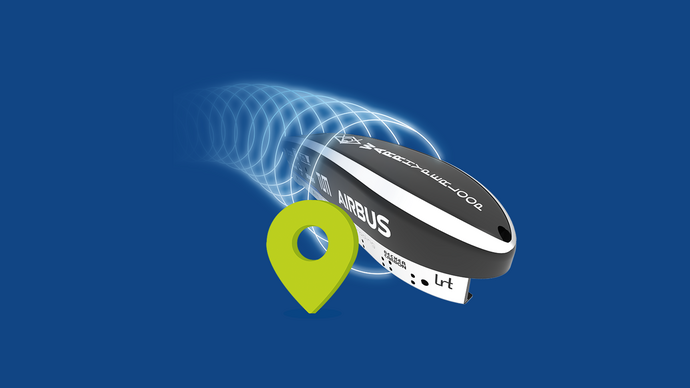

Graphic representation of the prototype WARR Hyperloop 2
12/31/2018
Reading time: 2 Min.

150 years of TUM – Stories from the 2018 anniversary

High-speed pods

US business magnate Elon Musk plans to turn his hyperloop vision for a future transport system that propels passengers between cities at the speed of sound into reality by 2030. Students from the Technical University of Munich (TUM) have won his Hyperloop Pod Competition in 2017 for the second time – easily outpacing the rest of the field.

Studies Research Mobility Community
Collage: Icons symbolizing the Internet of Things swirling towards a smartphone
12/30/2018
Reading time: 4 Min.

150 years of TUM – Stories from the 2018 anniversary

The internet of the future

Data streams are exploding the world over. Managing this data surge is one of the biggest challenges of the digital age. In 2016, three communications engineers at the Technical University of Munich (TUM) developed an algorithm to do just this by pushing transmission rates close to their theoretical limits.

Research Community
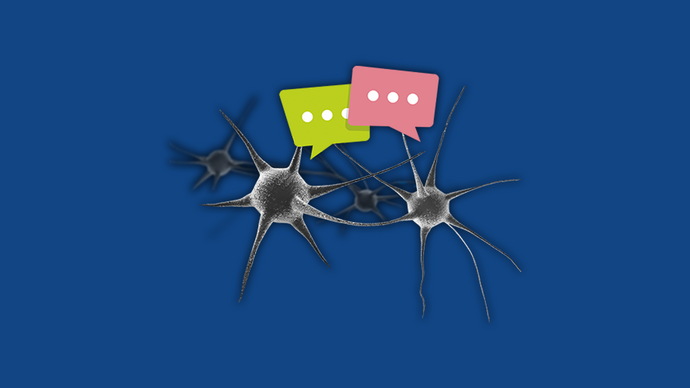
Collage of two neurons with speech bubbles
12/29/2018
Reading time: 3 Min.

150 years of TUM – Stories from the 2018 anniversary

A live stream from the brain

For a long time, neuroscientists have dreamed about observing nerve cells live in the brain. As of 2015 they can – with extreme precision – thanks to the work of Arthur Konnerth and his research group at Technical University of Munich (TUM). Their discoveries have thrown up a few surprises – and pave the way for new therapies to treat dementia disorders like Alzheimer’s.

Research Community
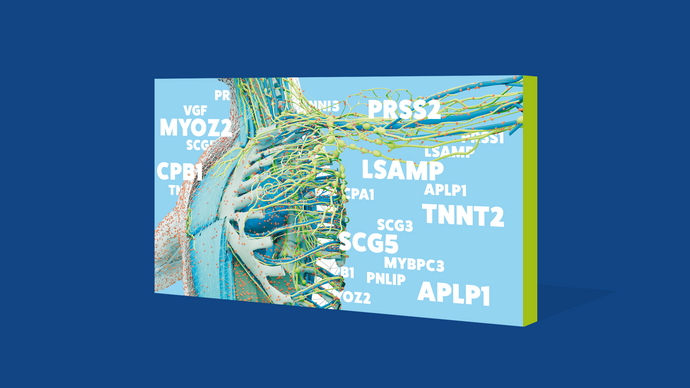
Illustration of a “protein map” of the human body
12/29/2018
Reading time: 3 Min.

150 years of TUM – Stories from the 2018 anniversary

Protein map

They determine what type of hair we have, digest our food and fight against pathogens – nothing would work without proteins in the human body. In 2014, a research team at the Technical University of Munich (TUM) has identified 18,097 of these molecules and thus produced an almost complete inventory of the human proteome. The aim is to enable individualized treatment for all patients in the future – even for diseases such as cancer.

Research Community
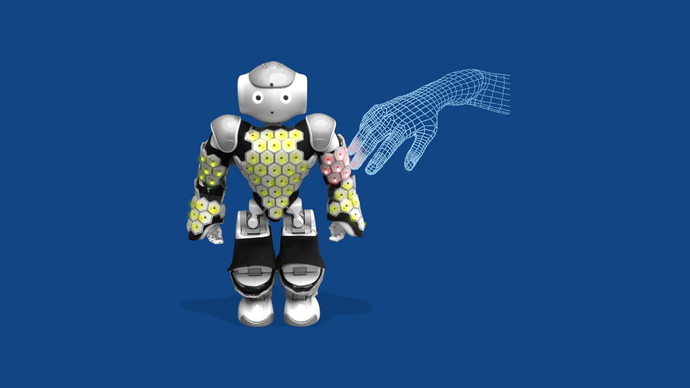
NAO robot with sensor skin by the TUM Institute for Cognitive Systems
12/29/2018
Reading time: 3 Min.

150 years of TUM – Stories from the 2018 anniversary

Robots capable of feeling

How does a robotics researcher help paralyzed people learn to walk again? By teaching robots the skills and needs of people. In an innovative new approach, Gordon Cheng from the Technical University of Munich (TUM) is combining robotics with neuroscience to develop robots capable of feeling since 2014.

Research Community
A galaxy and letters
12/29/2018
Reading time: 4 Min.

150 years of TUM – Stories from the 2018 anniversary

Messengers from outer space

What cosmic catastrophes can they be traced back to? That is a mystery we are finally starting to uncover. What has long been clear is that the high-energy neutrinos detected in 2012 by Elisa Resconi from TUM with the IceCube neutrino telescope at the South Pole come from outside of our solar system. These particles can pass through any kind of matter without difficulty. In 2017, we were able to identify a neutrino source for the first time: a blazar four billion light-years away.

Research Community
Collage showing a hand focusing on an origami bird
12/28/2018
Reading time: 4 Min.

150 years of TUM – Stories from the 2018 anniversary

DNA origami

DNA can do a whole lot more than just store genetic information. In 2009, a physicist at the Technical University of Munich (TUM) specializes in folding and bending DNA molecules, assembling them into a completely new structure. Its stability makes DNA an excellent building block for tiny tools – even for medical use.

Research Community
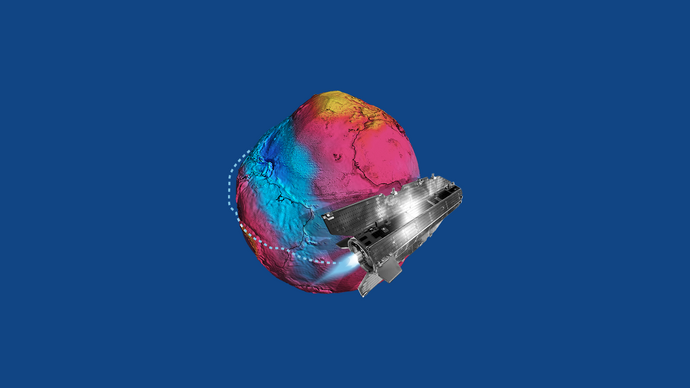
Collage: Gravity field model of Earth (geoid) with Goce satellite
12/28/2018
Reading time: 4 Min.

150 years of TUM – Stories from the 2018 anniversary

Gravity satellite

The plan was for a satellite to measure the gravity of our planet – and thus reveal what it looks like deep inside the Earth. Even the European Space Agency (ESA) knew it was a tall order. But in 2009, a large international research team, coordinated by the Technical University of Munich (TUM), managed to do just that. Using data from outer space, the researchers were able to put together a brand new image of the Earth – and discover that it looks just like a potato.

Research Community
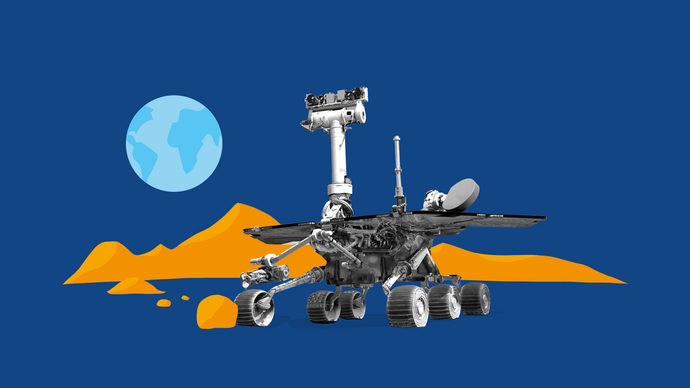
Collage showing NASA Mars Exploration Rover Opportunity on the surface of Mars
12/28/2018
Reading time: 4 Min.

150 years of TUM – Stories from the 2018 anniversary

Mars Exploration Rovers

Once upon a time there was water on Mars! NASA discovered the evidence in minerals on the planet’s surface in 2004 – using a method developed by a PhD student of the Technical University of Munich half a century before. Aged just 32 at the time, Rudolf Mössbauer was awarded the Nobel Prize for this achievement.

Research Community
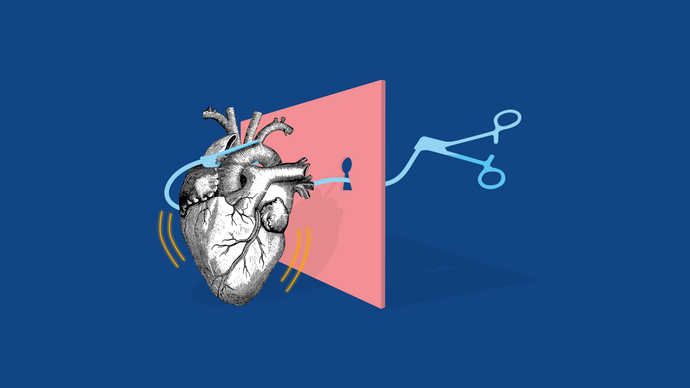
Illustrative image of minimally invasive heart surgery: an intrathoracic clamp accessing a heart through a keyhole
12/27/2018
Reading time: 4 Min.

150 years of TUM – Stories from the 2018 anniversary

Heart surgery

In open-heart surgery, the stakes are high. So when surgeon Rüdiger Lange inserts a new heart valve, he makes just a tiny incision in the skin. In 2000, the Technical University of Munich (TUM) physician became the first in the world to use this minimally invasive technique, which reduces the physical strain of the operation on patients.

Research Community
Loader
Technical University of Munich

Corporate Communications Center
Arcisstr. 21
D-80333 Munich
Tel. +49 89 289 22778
pressespam prevention@tum.de

Team

HSTS